



Navratri fashion is closely linked with color, movement, and regional traditions. A thoughtfully styled Gujarati chaniya choli brings these elements together through its flowing silhouette, detailed craftsmanship, and lively combinations, making it a natural choice for women who want their festive clothing to feel culturally rooted.
Modern interpretations have introduced new fabrics, cuts, and styling ideas, but the traditional character of Navratri dressing remains important. Women can experiment with jewelry, dupatta arrangements, and color combinations while still preserving the distinctive visual identity associated with Gujarati festive fashion.
Understanding the Traditional Silhouette
A chaniya choli usually combines a flared skirt with a fitted or semi-fitted blouse and a dupatta. The generous movement of the skirt makes the silhouette particularly suitable for Garba and Dandiya, where dancing is an important part of the celebration.
The structure also provides plenty of space for decorative details. Designers can introduce contrasting panels, embroidered borders, mirror work, or colorful motifs without losing the recognizable character of the traditional outfit. This balance allows the garment to feel festive without appearing overly complicated.
Color Sets the Festive Mood
Color can completely change the personality of a Navratri outfit. Bright combinations create an energetic appearance, while deeper shades can give evening clothing a more dramatic feel. Contrasting colors also become noticeable as the skirt moves during dancing, adding another dimension to the overall look.
When planning a festive color palette, consider:
-
The time and setting of the celebration
-
Jewelry and footwear you already own
-
Whether the outfit suits daytime and evening events
-
Shades that work well with your preferred makeup
Thinking about these details beforehand helps the complete outfit feel coordinated rather than put together at the last minute.
Mirror Work Adds Regional Character
Mirror work remains one of the most recognizable decorative features associated with western Indian festive clothing. Its reflective surface catches venue lighting beautifully, while small mirrors can be arranged into geometric patterns, floral motifs, or detailed borders across the garment.
The amount of embellishment should also match the occasion. Heavily decorated clothing can look impressive but may become uncomfortable during several hours of dancing. Balanced mirror work, embroidery, and fabric detailing usually create a better combination of movement, texture, and traditional appeal.
Choosing a Richer Blue Palette
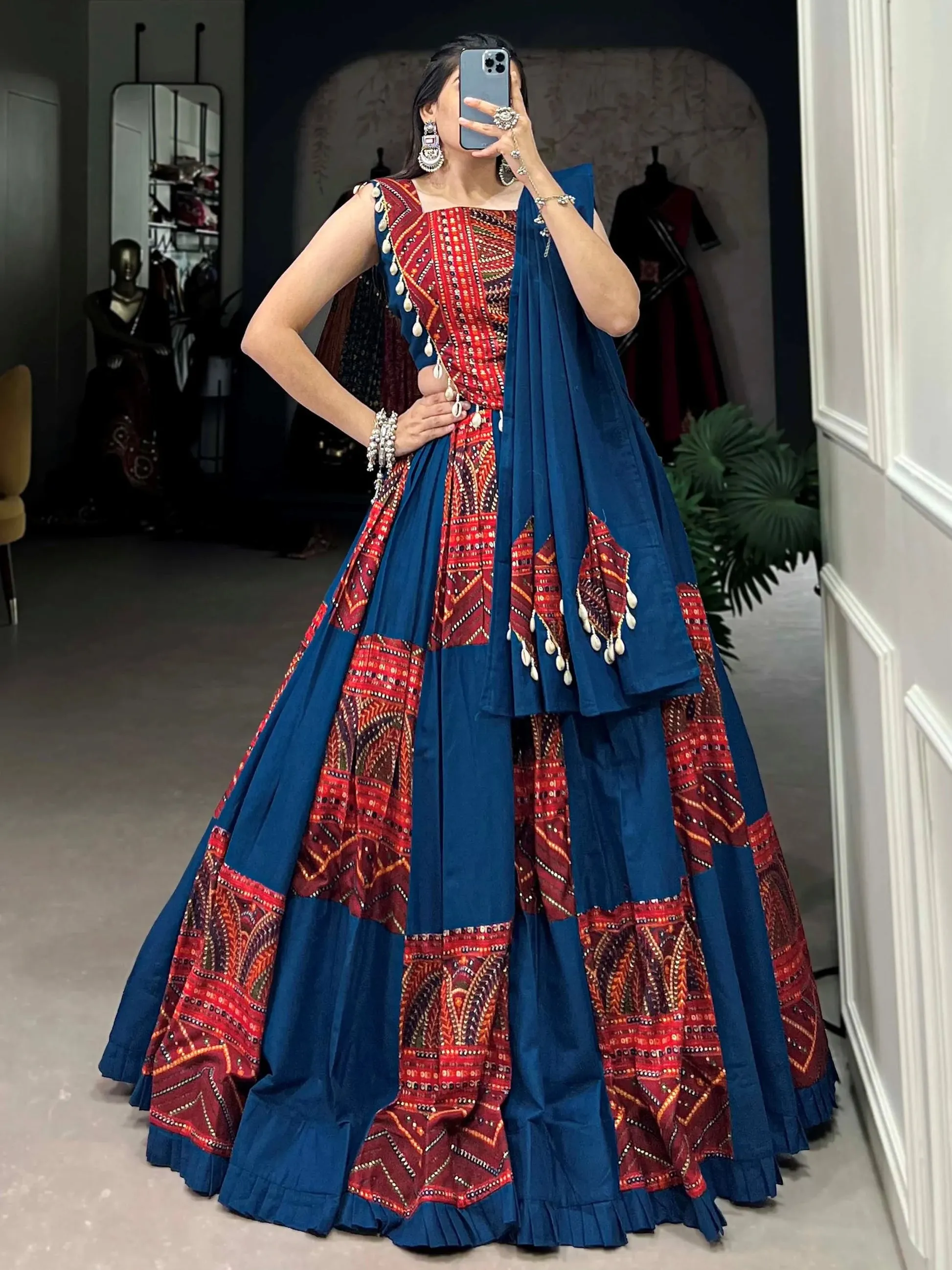
A royal blue chaniya choli can create a strong festive appearance without depending entirely on extremely bright colors. The depth of the shade provides a solid visual foundation, while mirror work, embroidery, or contrasting borders can introduce additional color without making the outfit feel excessive.
Royal blue also offers flexibility when choosing accessories. Gold jewelry can create a more traditional appearance, whereas silver pieces provide a cooler contemporary finish. The dupatta, footwear, and hairstyle can further influence whether the final outfit feels elaborate, understated, or somewhere comfortably between the two.
Styling for Garba Nights
Navratri clothing needs to look beautiful while remaining practical enough for movement. A comfortable blouse fit, secure dupatta, and well-fitted waistband can make a noticeable difference when celebrations involve several hours of dancing, walking, and socializing with family and friends.
Useful finishing choices include:
-
Flat or low-heeled footwear for easier movement
-
Secure dupatta draping during active celebrations
-
Lightweight jewelry for extended wear
-
Breathable fabrics for outdoor events
These practical details do not reduce the traditional appeal of the outfit. Instead, they make it easier to enjoy the celebration while keeping the overall appearance polished in photographs and during the festivities.
Keeping Tradition Personal
Traditional clothing does not need to look identical from one person to another. Individual choices in color, embroidery, accessories, and styling allow women to connect with regional fashion while creating an appearance that feels personal rather than overly coordinated.
This flexibility helps keep festive clothing relevant across generations. A classic silhouette can be adapted through simpler detailing or contemporary fabrics, while traditional craft techniques preserve its cultural character. The finished outfit can therefore feel familiar and modern at the same time, making it appropriate for both traditional celebrations and newer interpretations of Navratri fashion.
Conclusion
Gujarati festive dressing carries a strong regional identity through its silhouettes, colors, decorative techniques, and emphasis on movement. A thoughtfully chosen chaniya choli can respect these traditions while leaving plenty of room for personal styling. By balancing embellishment with comfort and considering the celebration before selecting colors or accessories, women can create a Navratri outfit that feels authentic, practical, and naturally suited to the occasion.